
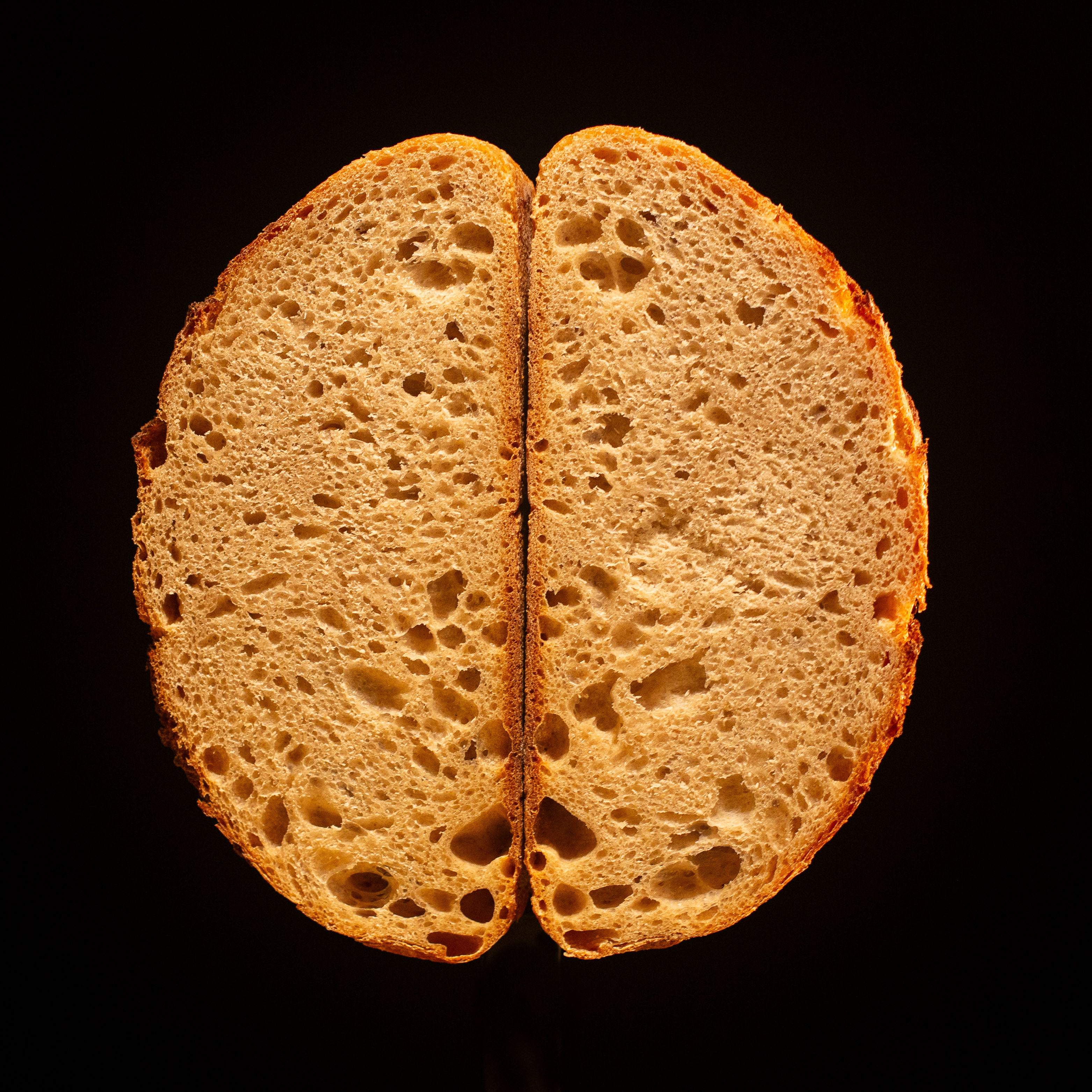
I want to talk about something I get asked about a lot at the market: bread and weight. More specifically, whether eating sourdough has made a difference for people, because a surprising number of you have told me it has.
I'll be honest with you. I've noticed it myself. Since sourdough became a daily part of my life, I feel satisfied longer after eating. I don't find myself reaching for something else an hour later. Whether that's the bread itself or just the fact that I'm eating more slowly and mindfully, I can't say for certain. But the experience is real.
So I did some reading. And while I want to be upfront that the science here is still evolving, and that I'm a baker rather than a nutritionist, there are some interesting things happening inside a real sourdough loaf that are worth understanding.
Sourdough is fermented food, not just baked bread
This is the part that changes everything. Real sourdough, made with a live wild yeast starter and fermented for 12 to 48 hours, is a fundamentally different product than commercial bread. During that long fermentation, wild bacteria are actively breaking down starches and sugars in the flour. What comes out the other side has a different structure, a different nutritional profile, and a different effect on your body than anything that was mixed and baked in two hours.
Commercial bread labeled "sourdough" at most grocery stores uses added yeast with a tiny splash of vinegar for flavor. There's little to no real fermentation. It's a completely different thing wearing the same name.
The glycemic response is lower
One of the more well-documented effects of real sourdough fermentation is a lower glycemic response compared to regular bread. The fermentation process breaks down much of the starch, and the organic acids produced along the way, particularly acetic acid, slow how quickly glucose enters the bloodstream after you eat. A slower, gentler rise in blood sugar means a gentler insulin response. And that, many researchers believe, has downstream effects on energy, hunger, and how your body stores fat.
Some people draw comparisons between this mechanism and newer pharmaceutical approaches to blood sugar and appetite regulation. The comparison is worth understanding, but real food works through the whole complexity of your digestive system, not as a concentrated drug. They are not the same thing, and bread is not a substitute for anything your doctor has prescribed. What sourdough offers is a gentler, more natural version of support, built into the food itself.
Your gut notices the difference
Long fermentation also leaves behind fibers and resistant starches that survive the small intestine. Your gut bacteria ferment those in the colon and produce short-chain fatty acids, which nourish the lining of the gut and feed a healthy microbiome. A healthy, diverse microbiome is increasingly understood to play a role in how your body regulates hunger, through hormones like GLP-1, ghrelin, and leptin, which signal fullness and appetite. Better gut health may mean better appetite regulation over time. Not a dramatic effect, but a real and cumulative one.
Resistant starch keeps you full longer
Real sourdough also contains more resistant starch than commercial bread. That is starch which resists quick digestion and moves more slowly through your system. This is a big part of why sourdough is so satiating. You stay full for hours. You don't find yourself hungry again before lunch. That's not magic. That's just what slow fermentation does to the structure of the bread.
What this means practically
None of this is a weight loss claim. I want to be clear about that. But it is a genuine argument for the idea that not all bread is the same, and that the bread your grandmother made, the bread made the slow way with real fermentation, works differently in your body than the industrially produced loaves that fill most grocery shelves.
If you've noticed that sourdough sits differently with you, that you feel better, fuller, more settled after eating it, you're not imagining things. There's real biology behind that experience.
Eat it at the start of a meal to get the full glycemic benefit. Pair it with protein and fat. Choose dense, chewy crumb over fluffy white, because the texture is a clue about how much fermentation actually happened. And if you want to know exactly what went into your loaf, come find me at the market.