
We came for the land. The bread came later.
Over a decade ago, Jan and Pat came to a beautiful piece of land on the Clearwater River outside Orofino, Idaho. They raised cattle, tended a garden, and started baking sourdough as an experiment. Friends and family loved it so much that the sideline became the main event. This is the story of the farm, the bread, and the two people who built it.
The first time Jan and Pat drove down the Clearwater River canyon, they weren't sure they were ready to leave the life they knew. Then an eagle dropped out of the sky, pulled a fish from the river, and lifted off again. Jan remembered a dream she had carried since her twenties, of living somewhere this wild and this green, and turned to her husband. The first property the realtor showed them was Crow Bench Farm. It took more than a year before they were ready to move. The farm waited. It was still for sale when they came back for it.
"Honey, we're home." – Jan, on that first drive down the ClearwaterJan and Pat were married on common ground: a shared love of cooking, of recipes traded and perfected together, of long evenings in the kitchen. So it made sense that their life in Idaho would eventually come back to food. First, though, came the cattle. Forty-some head of grass-fed beef, raised the hard way. No fancy equipment. A ton of hay fed out by hand, twice a day, every day, and pastures rotated on foot to raise the best grass-fed beef they could. Honest work, in a place built for it.
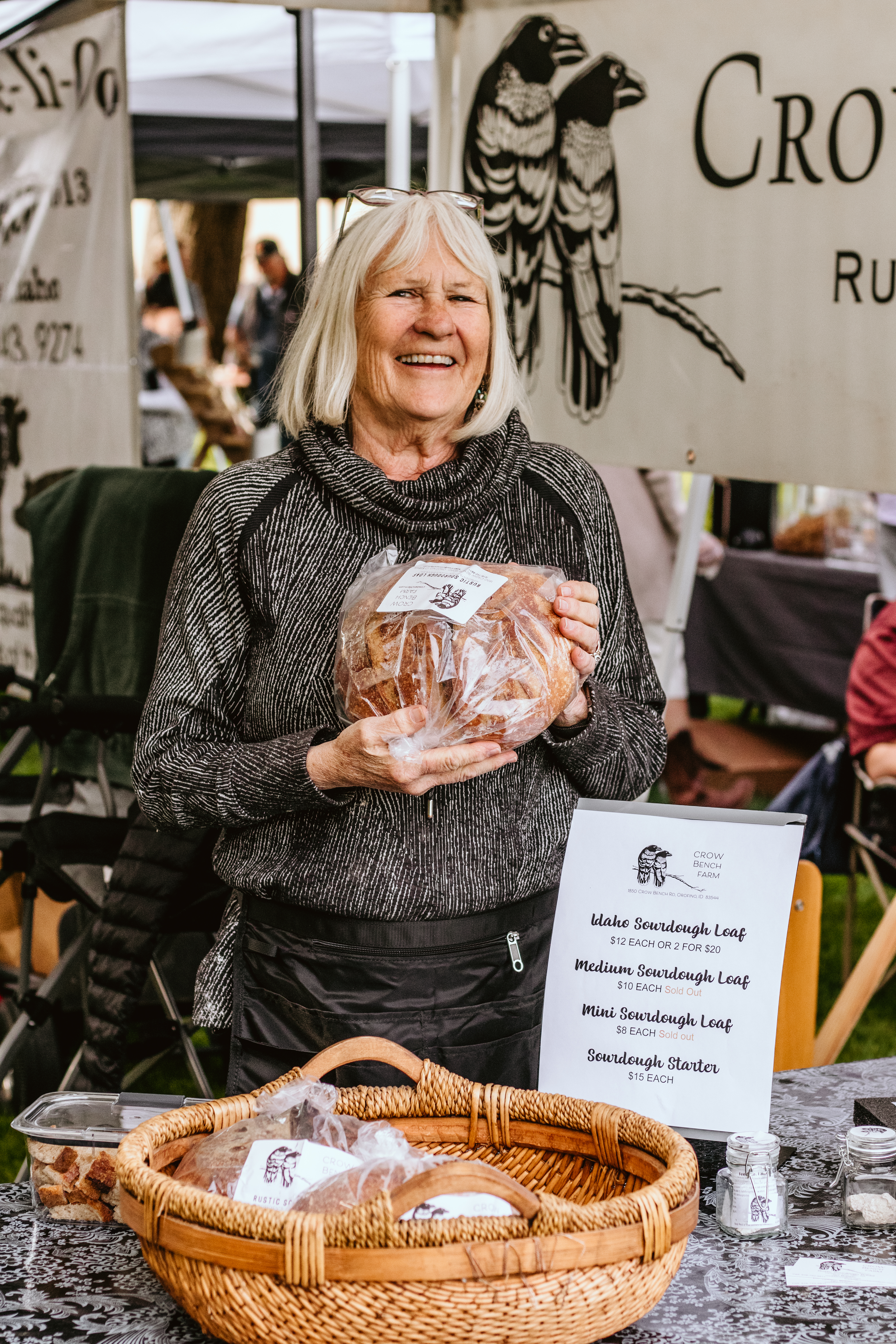
Somewhere in those years, Pat started baking sourdough. The early loaves were, by Jan's own account, closer to frisbees than bread. But he kept at it, and when Jan headed to the farmers market with beef, she took a couple of his loaves along. They sold two. Then four. Then sixteen. Then Pat needed a bigger mixer, and the bakery moved out of the kitchen and into the study, and the two of them worked as a team, loaf after loaf. Jan will tell you the bread was never supposed to be her thing. That was Pat's department. Then, somewhere between the mixing and the market table, it became her love affair too.
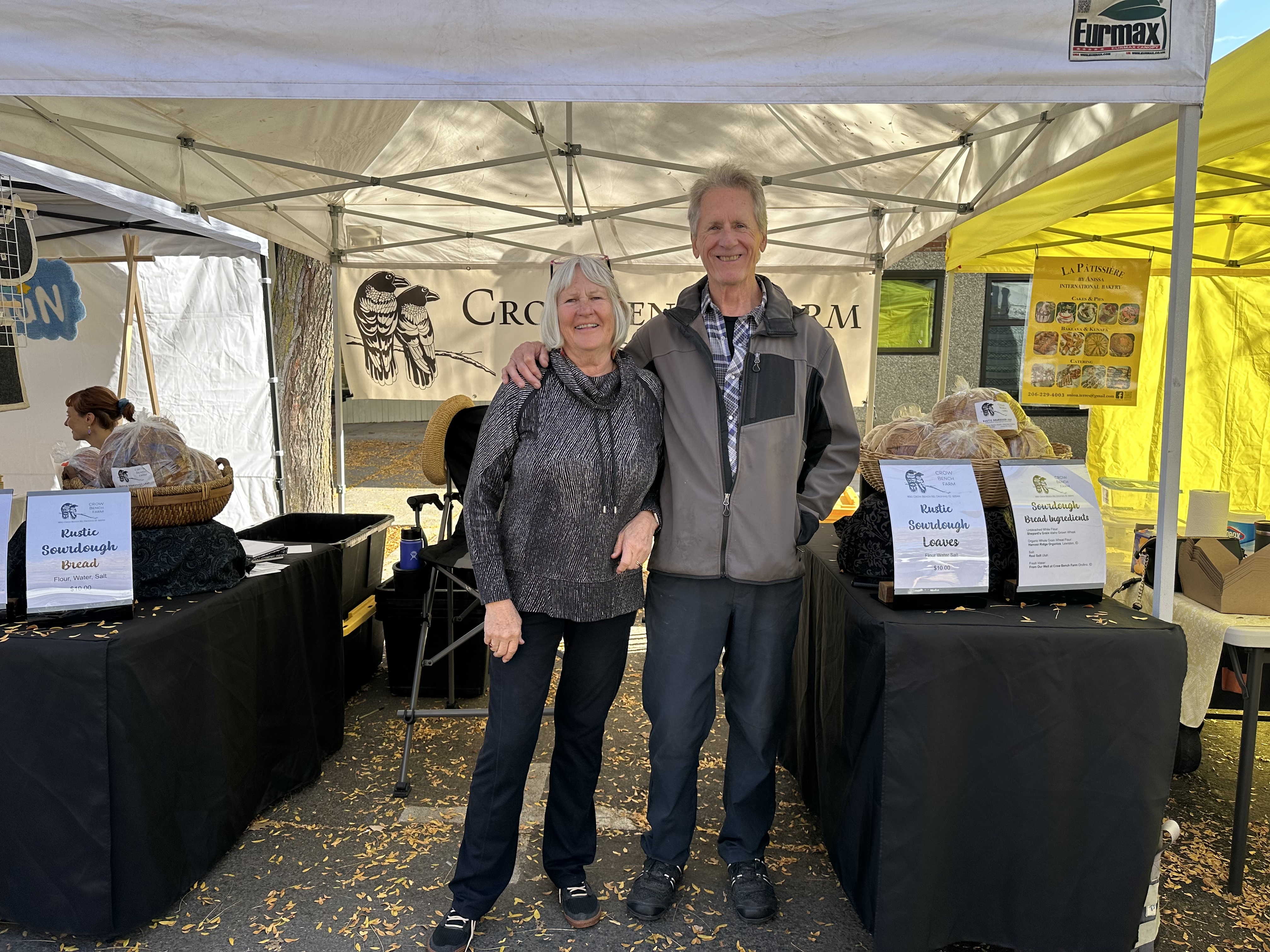
A few years ago, Jan lost Pat. The bread is how she carries him forward. The bakery they built together is hers now to grow, and grow it she has, slowly and carefully, the way they always did things. New offerings come only after they've been tested and earned their place at the market table. What began as an experiment in a farmhouse kitchen has become the heart of the farm, and of the community that gathers around it.
Every loaf still holds to the standards the two of them set. The starter was captured from wild yeast native to the Clearwater Valley. It lives in this place, in this kitchen, and it has been alive since the early years of the farm. The flour is Shepherd's Grain wheat, grown by a cooperative of Pacific Northwest farmers practicing regenerative agriculture, blended with organic whole grain from Harvest Ridge Organics, a fifth-generation family farm in Lewiston, Idaho. The salt is Redmond Real Salt, mined from an ancient seabed in Utah. The water rises cold from the farm's own artesian well. Four ingredients. Nothing else.
What keeps Jan baking is what the bread does for people. The long, slow fermentation breaks the dough down before it ever reaches the oven, and customers who struggle with ordinary store bread tell her, week after week, that they can enjoy hers. One woman went ten years without eating bread at all. Now she stops by Jan's stand just to say she has toast every morning. For Jan, there is no better reason to fire the oven.
And when winter slows the markets, Jan opens her farmhouse kitchen and teaches. Watching someone hit that aha moment, the realization that they can make this bread too, is one of her greatest joys. Because to Jan, sourdough was never meant to be a specialty skill. It's meant to be shared, the way she and Pat shared it: at a table, with people you love. You'll find her Thursdays at the Orofino Farmers Market, Saturdays at the Moscow Farmers Market, and in between at the Breadboxes, 330 B St in Orofino and Wingover Farms in Moscow.
Bread made by hand, for reasons that matter.
The dough ferments for three days. That is not a selling point. It's just what it takes. Fast sourdough is not sourdough.
Every ingredient comes from somewhere Jan can account for. Regenerative farms in the Pacific Northwest. A family operation in Lewiston. A mine in Utah. Water from our own ground.
Jan bakes what she can manage well. A bakery that makes ten thousand loaves a week and a home baker who makes two are making different things. She is closer to the second.
The ability to bake your own bread is not a specialty skill. Jan teaches because she believes everyone who wants to know how, should know how.
The starter was captured here. The water is from this land. The markets are within an hour. This bread belongs to the Clearwater Valley.
No commercial yeast. No dough conditioners. No fillers. The ingredient list has four items. Every one of them is real.
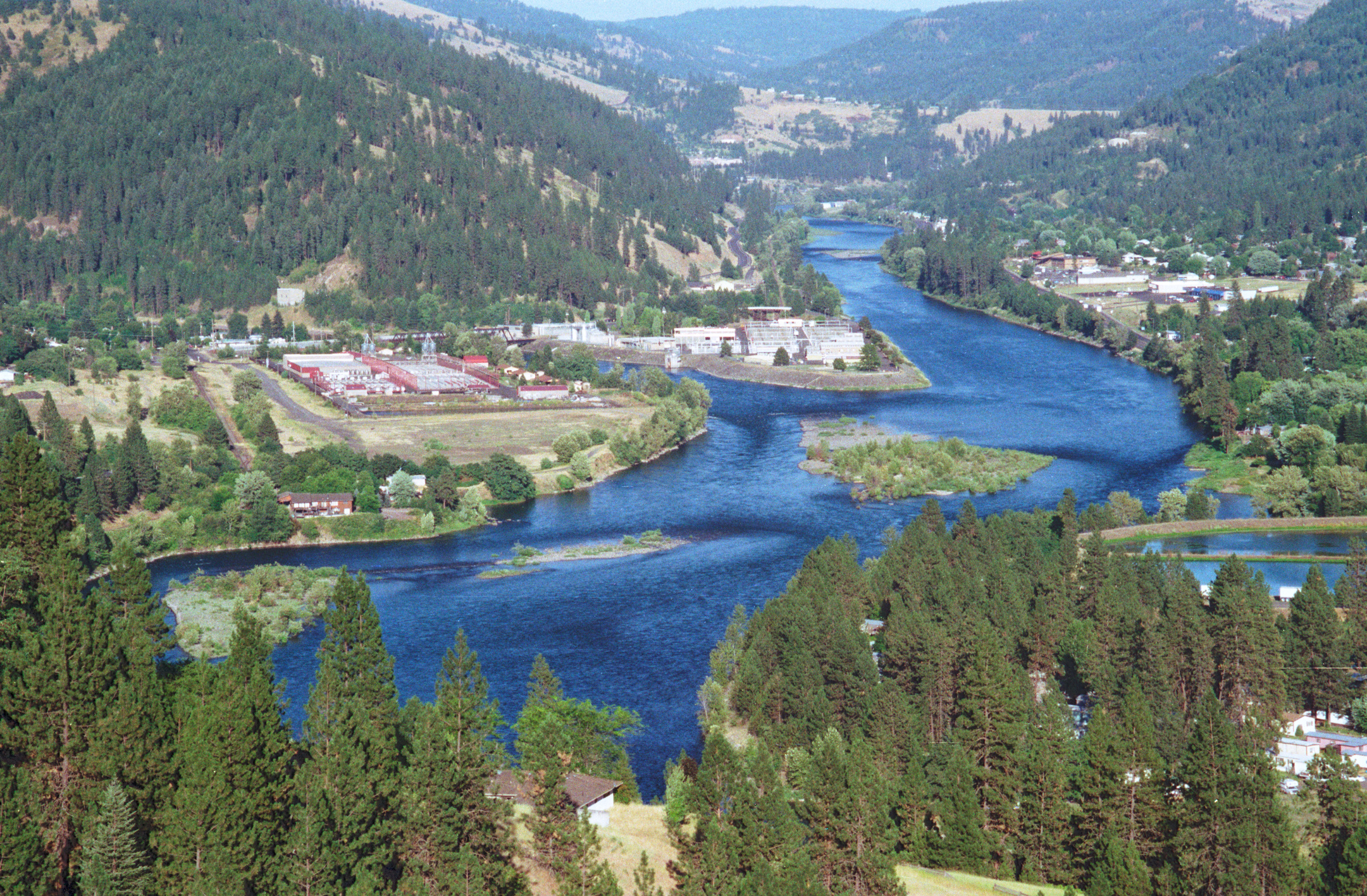
The Clearwater Valley.
Orofino sits at the edge of the Clearwater River canyon, in the mountains of north-central Idaho. It's wheat, logging, and cattle country. Honest work, long winters, short summers. The kind of place where people grow their own food because it makes sense, not as a lifestyle choice.
Crow Bench Farm is on a stretch of land outside town. The waters in our bread have been flowing since before the Nez Perce fished this river, long before Lewis and Clark ever wandered through the valley. The wild yeast in our starter arrived on its own, from whatever lives in this particular air and soil. That is not poetry. It is how sourdough works.
We have lived here for over a decade. We plan to stay.
Order a loaf or learn to bake at home.
Pre-order for pickup Thursday in Orofino or Saturday in Moscow, or learn Jan's method from your own kitchen with the online course.