
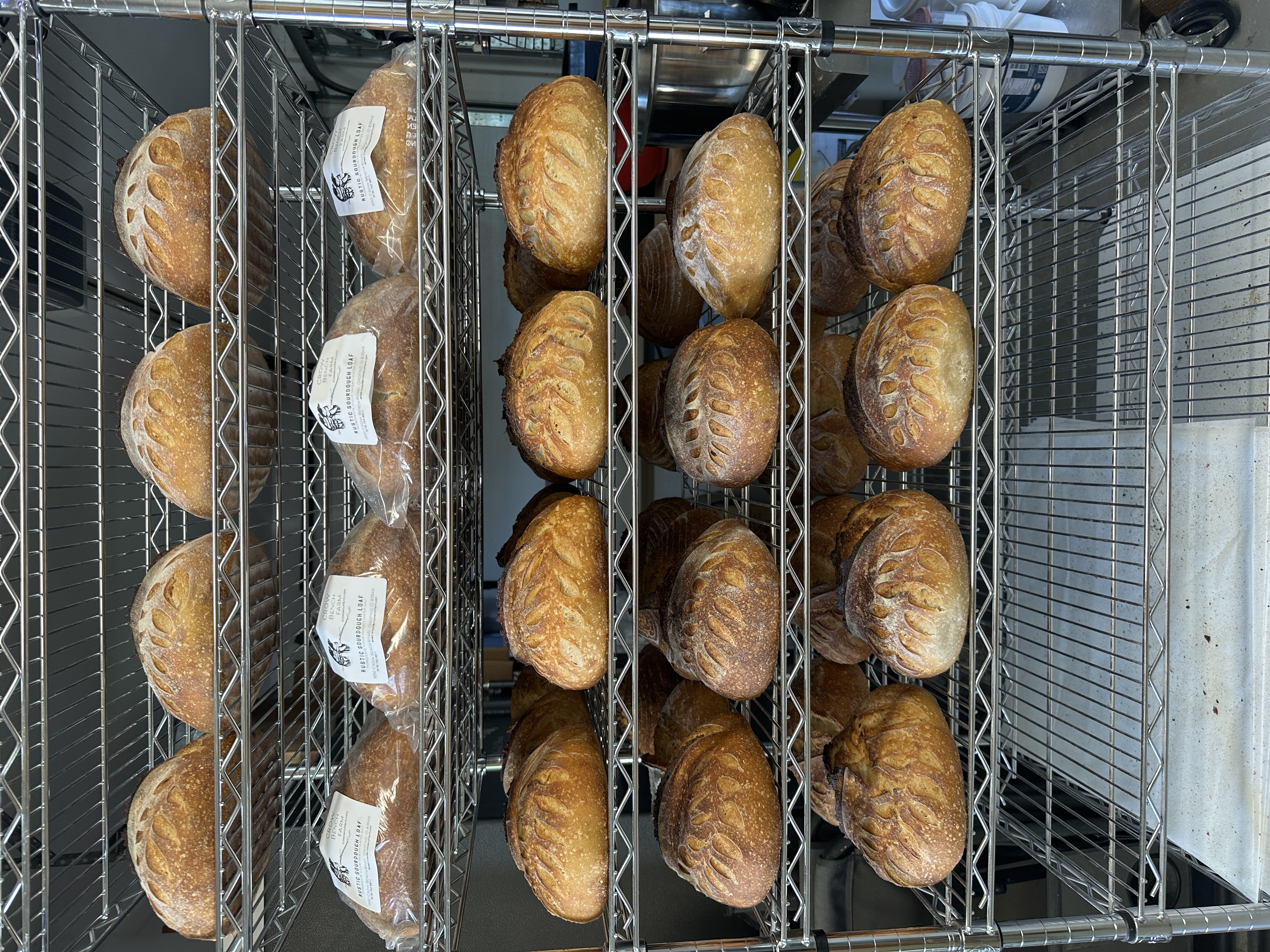
One of the questions I hear most often is, "How should I store my bread?"
The honest answer is: it depends on how you plan to eat it. There are a few good options, and none of them are wrong, just different.
Let the loaf breathe
The best home for a loaf is a wrap that breathes. A beeswax-lined bread bag is the one I reach for, because it holds moisture in the crumb without trapping it against the crust the way plastic does. Plastic is the one thing I'd steer you away from: it turns a proud, crackly crust soft and gummy. A cloth bag or a clean tea towel works well too. (We make our own beeswax bread bags at the farm, sized for a Crow Bench loaf. They're in the shop now.)
For crust lovers
Another option is storing your loaf cut-side down on a cutting board. This keeps the crust in good shape and makes for easy slicing, especially if the cut is nice and even so the loaf sits flat. The tradeoff is that the crumb will dry out a little faster, but many people love this method for short-term use.
For the long haul: freeze it
For longer storage, freezing is your friend. Wrap your loaf tightly in freezer paper or foil, with an airtight container for extra protection. You can freeze the whole loaf, or slice it first so you can take out what you need. Cutting the loaf in halves or quarters before freezing also works well if you like to pace yourself.
How to bring a loaf back to life
If you're working with a loaf that's been frozen, or one that's just a couple days old, there's an easy way to revive it. Let frozen bread thaw completely while still wrapped. Preheat your oven to 375°F. Unwrap the loaf, lightly mist the crust with water, and bake for about 10 to 12 minutes. You're aiming for an internal temperature of around 130 to 140°F. Let it cool just enough to handle, then slice and enjoy.
A word about bread knives
A good bread knife makes all the difference, especially with crusty loaves. Look for one with a long blade, about nine inches or more, and gentle, scalloped serrations rather than sharp teeth. I let the knife do the work, using a light sawing motion and very little downward pressure, especially at the start of the cut. Slow and steady wins here.
Add butter, honey, jam, or whatever makes you smile, and you're in good shape.
And if a loaf ever slips past its prime, that's not a loss. That's stuffing, French toast casserole, or French onion soup waiting to happen.