
I leave Orofino most Saturday mornings around five o'clock. It is dark when I turn onto Crow Bench Road. The deer are still in the fields, and the wildlife I share my mornings with scatter into the trees as my headlights come through. I cross the Clearwater, and I always check the water level, then turn onto Highway 12 into the canyon. Fishermen are already on the road, trucks hauling boats in the dark. I count the boats already on the water. It is a good sign when there are many.
The Clearwater River runs alongside me for miles, black and silver in the early light, the ponderosa pines and canyon rock reflected in it. There is a spot near the Reubens turnoff where, on many mornings, the first sun catches a cluster of trees just so: spring green or autumn gold, lit up against the blue shadow of the canyon that has not been touched by light yet. I look forward to it every single week.
Then Lewiston appears below in its morning cloud, and I always think of Mordor with the towers steaming, and I climb the grade in my truck, grateful for every horsepower, until the canyon opens and I am up on the Palouse.
And that is where the wheat is.
The fields change every week
I have watched those fields change every week of every season for years now. Snow-covered and sleeping in winter. Tiny green shoots pressing up through the rich brown soil in early spring, the first sign that something is happening underground that you cannot yet see. The fields go fully, brilliantly green through late spring. Then come the yellow fields of canola, a color almost too bright to look at. And then, in August, the wheat turns. The Palouse goes golden. Harvest is near.
There is no rushing a field of wheat
I think about those farmers constantly. I think about what it takes to bring a crop through from seed to harvest: the soil preparation, the planting decisions, the watching of weather, the worry, the patience. A wheat farmer does not plant in October and harvest in November. The crop moves on its own schedule, through cold and wet and heat and drought, and the farmer's job is to tend it, protect it, and trust the process. There is no rushing a field of wheat.
The miller is the second keeper of this story
When the wheat comes in, it goes to the mill. The miller's craft is its own deep art: stone milling, roller milling, the decisions about extraction rate and fineness and how much of the bran and germ to include. The flour I use matters enormously to the bread I bake. High-quality wheat, milled with care, brings character and nutrition and flavor that you simply cannot manufacture.
And then the flour comes to me
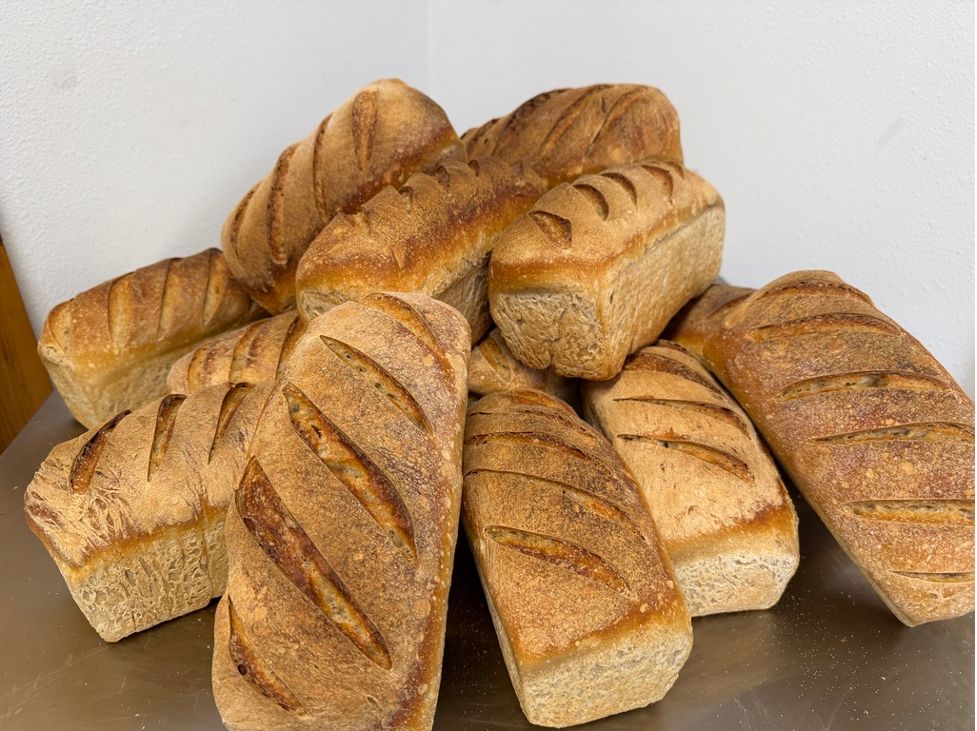
I mix it with water and salt and my sourdough starter, a living culture of wild yeast and bacteria that itself requires daily tending, feeding, watching. The dough rests. It ferments slowly, over many hours, the wild yeast working patiently through the flour, releasing flavor compounds and organic acids that no commercial yeast can replicate. I fold it, shape it, and let it rest again. Some loaves cold-ferment overnight. The schedule is not mine to dictate; it belongs to the dough.
Then the oven. The crust. The crack and bloom of a good bake. If you want the whole of it, I walked through the three days behind a single loaf earlier this year.
And then it comes to you.
What you are holding
When you hold a loaf of Crow Bench sourdough, you are holding the work of the farmer who prepared that soil and watched that sky. You are holding the miller who chose the stone and set the gap. You are holding months of growth and fermentation and care. You are holding patience, real, deliberate, unhurried patience, at every single step of the process.
I think that is why good bread tastes the way it does. It is not just flour and water. It is time, tended carefully by many hands before it ever reached yours.
Next time you drive the Palouse, or drive anywhere and see a field of grain, take a second look. There is a loaf of bread in there. And a whole lot of people who cared enough to bring it to your table.